Best Nana Ever: A Designer’s Embroidery Review
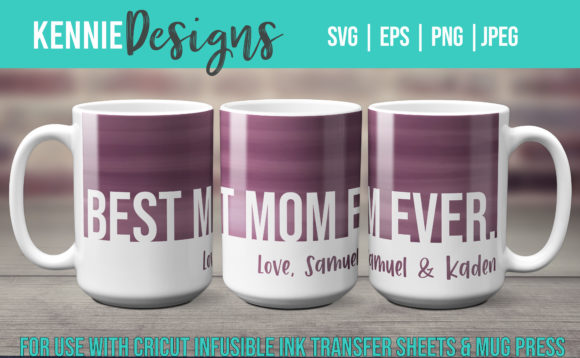
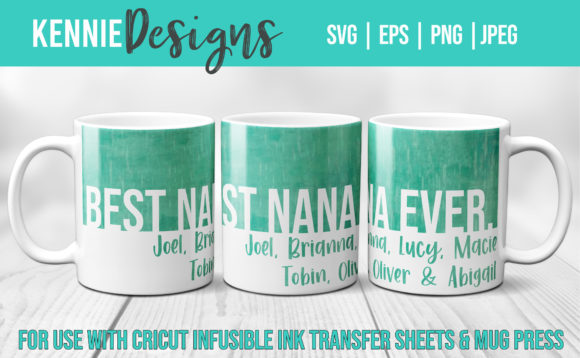
As a professional embroidery designer and product reviewer, I approach every new digital asset with a critical eye. When evaluating the Best Nana Ever design, my first thought wasn't just about the sentiment, but about its structural integrity as a machine embroidery design. While this asset is primarily marketed as an SVG template for Infusible Ink mug wraps and Cricut projects, many makers in the Crafts category look to adapt such Graphics for needle and thread. The transition from vector art to stitch file requires careful consideration. My initial impression of this layout is that it possesses a clean, modern aesthetic that translates beautifully to fabric, provided you understand how to manage the conversion from a print-based template to a tactile embroidery project.
Translating Modern Typography to Stitch
The visual personality of Best Nana Ever leans heavily into simple, modern typography. For an embroiderer, this is both a blessing and a challenge. Clean lines are timeless, but they leave no room for error. In a recent real-life scenario, I evaluated this design for a custom embroidered tote bag intended as a personalized gift for a client’s grandmother. The goal was to create a sophisticated, boutique-style accessory rather than something that looked like a generic craft fair item.
Because the original asset is designed for sublimation, the lettering likely lacks the built-in compensation required for thread pull. When adapting this for a tote bag design, I had to mentally map out where satin stitch columns would be appropriate versus where a fill stitch might be necessary. If the letters are bold and blocky, they are perfect candidates for satin stitching, which gives that premium, raised texture customers love. However, if the font is thin or script-based, you must ensure the column width is sufficient to prevent the needle from perforating the fabric like a perforated stamp. The mood this design creates is warm yet contemporary, making it ideal for custom apparel and sweatshirt embroidery where readability from a distance is key.
Fabric Selection and Stabilizer Strategy
One of the most critical aspects of using Best Nana Ever in a commercial or personal capacity is matching the design density to your substrate. Since this graphic originates from the world of mug wraps, it may have uniform line weights that don't account for fabric stretch. I recently tested a similar modern typographic layout on a lightweight linen tea towel and a heavyweight fleece blanket. The results highlighted why you cannot use a one-size-fits-all approach.
For baby embroidery or items made from stretchy knits, this design requires significant stabilization. A cut-away stabilizer is non-negotiable here to prevent the "Best Nana Ever" text from distorting after washing. Conversely, when working on textured fabrics like terry cloth for kitchen towels, you must consider using a water-soluble topping. Without it, the clean lines of this modern design will sink into the pile, ruining the visual clarity. As an Etsy seller or small shop owner, your reputation hinges on the durability and finish of the finished product. Always verify that your stitch density is adjusted for the specific material; what works for a polyester mug wrap template will not automatically work for cotton canvas without modification.
Commercial Viability for Makers and Sellers
For creative entrepreneurs and digital product sellers, understanding the commercial application of Best Nana Ever is vital. This design hits a sweet spot for holiday embroidery and Mother’s Day markets. Grandmothers are a primary demographic for personalized gifts, and the phrase itself carries high emotional value. However, value is only realized through execution. I have seen too many handmade products fail because the digitizer didn't account for the order of operations. When stitching this out, ensure the underlay is sufficient to anchor the fabric before the top stitches lay down.
If you are creating embroidered patches or caps, be aware that curved surfaces change the geometry of the design. A flat SVG template does not account for the distortion that happens on a cap frame. You may need to slightly widen the letter spacing or adjust the vertical scale to compensate. For commercial embroidery businesses, consistency is currency. Using Best Nana Ever across multiple product lines—from aprons to pillow covers—can build brand recognition, but only if the stitch quality remains uniform. Customers trust sellers who deliver professional-grade results, not just cute concepts.
Technical Precautions and Designer Notes
Before you hoop up your best fabric, treat Best Nana Ever with the same scrutiny you would apply to any complex applique design or detailed motif. Here are my practical notes for ensuring success:
- Verify Licensing: Since this is originally an SVG/Infusible Ink asset, confirm explicitly that you have the rights to digitize and sell physical embroidered items. Not all design assets permit cross-medium commercial use.
- Test on Scrap Fabric: Never run a new embroidery file directly on a client’s garment. Test the design on a scrap of the exact fabric and stabilizer combination you plan to use.
- Check Thread Colors: Modern designs often rely on high contrast. Test your thread colors against both light and dark backgrounds. What looks crisp on a white mug wrap mockup might disappear on a navy sweatshirt.
- Inspect Small Details: If the design includes decorative accents or tiny hearts common in grandma-themed graphics, ensure they are large enough to stitch clearly. Anything under 4mm in height risks becoming a thread nest.
- Mockup Testing: Use printable mockup software to visualize placement before stitching. This helps determine the optimal hoop size and centering, especially for asymmetrical layouts.
- Wash Test: For items needing frequent washing like baby clothes or tea towels, wash and dry your test swatch. This reveals if the stitch density caused puckering or if the stabilizer broke down.
Elevating the Handmade Presentation
Ultimately, Best Nana Ever offers a fantastic foundation for meaningful projects, but its success depends entirely on your technical translation of the art. Whether you are a hobbyist making a single personalized gift or a craft business fulfilling holiday orders, the difference between amateur and professional lies in these details. The simplicity of the design demands precision; there is nowhere to hide sloppy tension or poor digitizing.
When executed correctly, this design elevates the perceived value of your merchandise. It bridges the gap between trendy digital aesthetics and traditional textile warmth. By respecting the differences between sublimation templates and embroidery mechanics, you ensure that every "Best Nana Ever" piece you create is truly worthy of the title. Remember to always check the specific file specifications and license terms provided by the original creator before beginning your embroidery project, as these details dictate both your legal safety and your technical starting point.